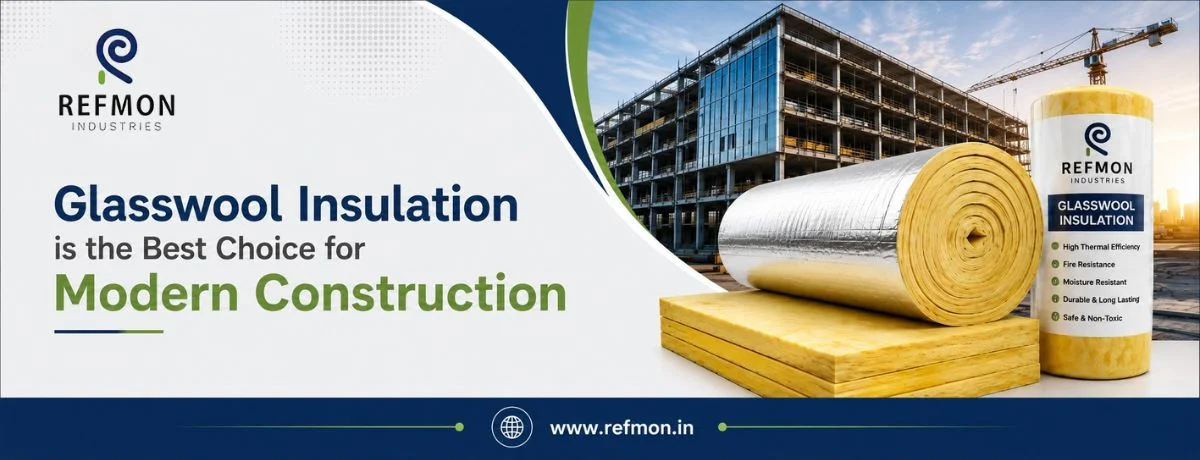
Why Glasswool Insulation is the Best Choice for Modern Construction
Insulation is an important element in the design of industrial buildings. It helps to create a stable environment, decrease energy consumption and provide safe working conditions. Good insulation products not only lead to safe and efficient machines but also to less heat loss in the workplace. All these factors are important in reducing the need for maintenance.
Glass wool has better thermal performance, fire resistance, sound absorption and more than other types of insulators. Keep reading to find out the key benefits that make glasswool a practical insulation choice for modern construction.
What is Glasswool Insulation?
Glasswool insulation (also called glass fiber or fiberglass) is a fibrous material produced by spinning molten glass into fibers. Those fibers trap pockets of air that impede the transfer of heat from one side of a wall, roof, ceiling or other part of the building to the other.
It has low thermal conductivity which aids in controlling the indoor temperature. It also dampens sound and is fire resistant, making for greater occupant comfort and safety.
Glasswool insulation can be used in places such as:
- Insulation for Buildings: Insulation used in walls, facades, roofs and underdeck insulation to enhance energy efficiency and comfort.
-
HVAC: Used in HVAC systems for ducting systems, piping, acoustics etc. in an effort to reduce energy loss, prevent condensation and reduce noise.
-
Sound Insulation: Best suited for soundproofing in theaters, studios, and domestic buildings (Home theater), also used in partition systems in offices and institutions.
-
Fireproofing: Used in buildings where there is a need for improved fire standards for personnel safety.
It is available in forms such as rolls, slabs, and glass wool boards. Product thickness and density may vary depending on project requirements.
Key Benefits of Glasswool Insulation for Modern Construction Projects
While selecting glasswool insulation, you cannot rely solely on its price. Its thermal performance, fire behavior, sound isolation, installation, durability, and ecological aspect may affect long-term value.
Below are some significant benefits that show why glass wool is the best choice for modern construction.
1. Effective Thermal Insulation
Glasswool reduces the transmission of heat through the building envelope. It is fibrous and traps air, so it is not so effective in transferring heat from warm areas to cold areas. It also helps to stabilize indoor temperatures. Proper insulation helps keep roofs and walls from getting too hot during the summer and too cold during the winter. This decreases HVAC system load.
2. Reduces Energy Consumption
Poorly insulated walls, roofs, ceilings and HVAC ducts will use more energy to heat and cool. Glasswool acts as a thermal barrier and stops unnecessary heat flow. HVAC systems use less energy to maintain the desired temperature. Glasswool can be used for insulating HVAC ducts to reduce the thermal losses.
3. Improved Acoustic Comfort
Glasswool is made of fine fibers and air gaps. This makes it good for absorbing sound waves. This way it helps to reduce the transmission of sound through walls, ceilings, partitions boards and HVAC units. Glasswool is suitable for business premises, homes, hotels, recording studios, schools and other places where people work or live.
4. Provides Fire Safety
Glasswool is a non-combustible material. Glasswool does not ignite easily and therefore does not add fuel to a spreading fire. Therefore, it can be used in applications where fire safety is a main requirement. However, selecting and installing products correctly is essential to meet fire safety requirements.
5. Easy and Efficient Installation
Glasswool is lightweight and easier to transport, cut, place, and install than many heavy materials. Various shapes and sizes allow glasswool to be used in a range of building assemblies. It is used for walls, ceilings, roofs, partitions, HVAC ducts, and selected industrial systems.
6. Supports Sustainable Construction
Glasswool can be produced from recycled glass, thus reducing the need for raw materials. It is light in weight and can be compressed, saving energy in storage and transport. Insulation also cuts down the energy needed to run the building. Sustainable buildings benefit from reduced heating and cooling needs.
Conclusion
Glasswool provides thermal insulation, sound absorption, non-flammability, easy installation, eco-friendliness and versatile applications. This makes glasswool an ideal material for modern residential, commercial and industrial construction.
Refmon Industries is an insulation and refractory materials manufacturer for industrial applications with a wide range of industrial materials and over 500 projects completed across India. Refmon provides practical insulation solutions designed to meet the thermal, acoustic, and fire-safety requirements of modern industrial and commercial projects.