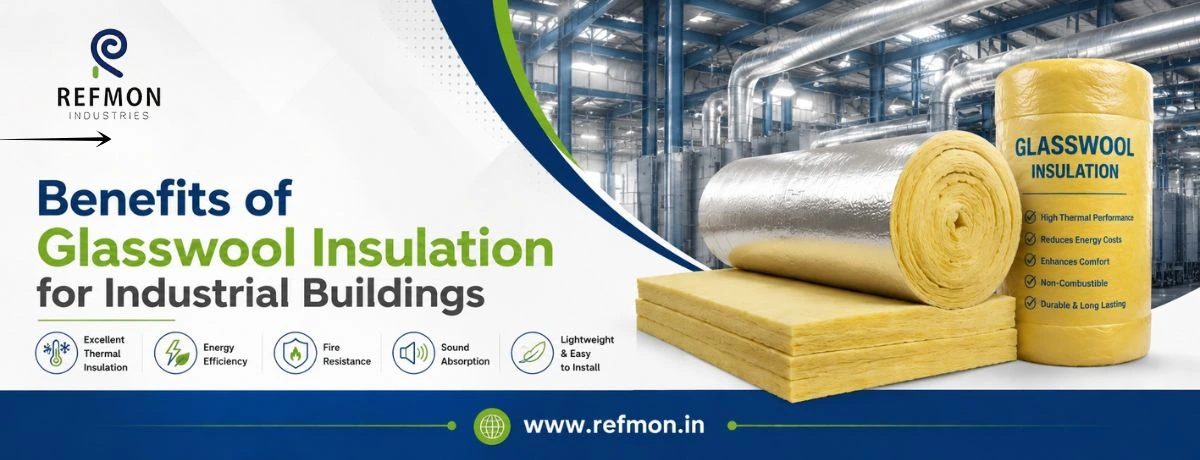
Top 7 Benefits of Glasswool Insulation for Industrial Buildings
An important aspect of the design procedures for industrial structures and buildings is the design of the buildings to provide efficient insulation that will create a stable environment, reduce the amount of energy consumed, and create a safer working environment. The advantages of good insulation are also the maintenance of safe and efficient machinery and the minimization of heat loss around the works. It is important in reduce maintenance requirements and having a positive impact on sustainable industrial operation.
Compared with other available insulators, glass wool insulation has excellent thermal properties, fire resistance, sound absorption, etc.
Why Glasswool Insulation Is Essential for Industrial Buildings
1. Excellent Thermal Performance
Glasswool insulation is superior in thermal resistance. This makes it an ideal insulation material for industrial buildings. This provides excellent resistance to heat transfer between the outdoor and indoor environments, reducing indoor temperature fluctuations throughout the year in the industrial building. This helps to minimize operating costs for heating and cooling systems while promoting greater energy efficiency. Persistent warm conditions also withstand the damage to temperature-sensitive equipment and industrial segments.
2. Significant Energy Savings
A lot of energy is required in many industrial plants to maintain temperature in the processes and indoors. Glasswool insulators will reduce heat loss in winter and help to prevent heat gain in summer. This will result in lower energy consumption in production, which will have a helping industries reduce operating costs. As they strive to minimize their electricity, fuel, and operational expenses. These savings over time can provide a return on the initial investment in the equipment.
3. Superior Fire Resistance
Safety is extremely important in industrial settings where there is a high risk of fire and flammable materials. Glass wool is a non-combustible insulation material with excellent fire resistant properties. Minimizes propagation of fire and heat transfer, giving extra time to respond to the emergency. This not only makes the workplace safer but also helps fulfil the industrial fire safety requirements.
4. Effective Sound Absorption
Companies and industries are generally generating excessive noise from the machinery and the production process. Glasswool is a highly effective sound-absorbing product that can be employed on walls, ceilings, and duct applications. By reducing noise levels, glasswool creates a more comfortable working environment, improves communication, and helps industries comply with occupational noise regulations.
5. Easy Installation with Long-Term Durability
The lightweight glass wool allows for easy transportation, handling, and installation of glasswool in a wide range of applications in industry. The roofing system is not subjected to a lot of weight even when used in roofs, walls, ceilings, HVAC systems and pipes. Glasswool can offer the perfect combination of durability and speed of installation, thereby helping industries reduce labor costs and a lot on labor cost and reduce time for your project and making it a preferred choice among insulation material manufacturers in India.
6. Moisture Protection and Long-Term Reliability
By reducing temperature differences on surfaces being insulated, condensation will be reduced over time, causing degradation and damage to the equipment used in industry, pipelines, structural components, etc. This minimizes equipment deterioration, mold growth, and corrosion. This also assures the thermal insulation performance for many years, while requiring very little maintenance, and it requires minimal maintenance throughout its service life.
7. Ideal for High-Temperature Industrial Applications
In industrial plants, glass wool is a commonly used insulation material because the temperature regime will be strictly maintained in the process. It is very suitable for use as hot insulation in piping 14 to prevent the hot surface of the pipe from being lost, for energy saving, and the protection of operators from approaching hot pipes. It also finds use in the industrial applications of extreme conditions, such as use in furnaces, storage tanks, boilers, steam pipelines, and HVAC ductwork as an insulation material.
Conclusion
Opting for the appropriate industrial insulation products is essential to ensure optimum performance, safety, and to make the best use of energy costs in the future. Glasswool insulation offers excellent thermal insulation, fire resistance, sound absorption, and moisture protection.
The material is versatile and can be applied in a range of industries such as HVAC systems & high-temperature piping. These insulation materials are effective and can be utilized by industrial sectors to conserve energy and protect valuable resources, improve workplace comfort and safety, and support efficient and sustainable industrial operations.