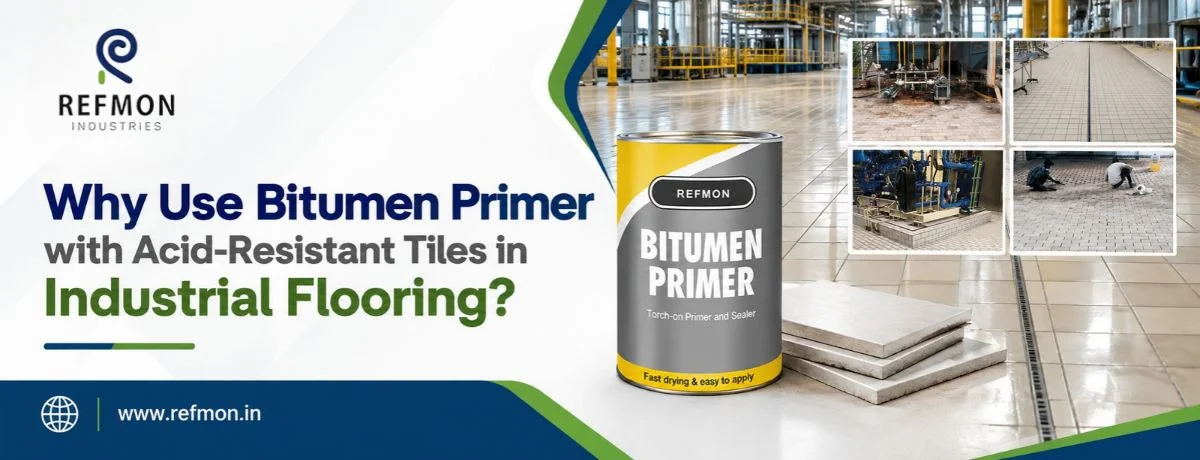
Why Use Bitumen Primer with Acid-Resistant Tiles in Industrial Flooring?
Industrial floors in chemical plants, laboratories, and manufacturing facilities are often exposed to corrosive chemicals, moisture, heavy loads and the repetitive movement of equipment. Selecting the right acid-resistant flooring system is essential to protect the concrete substrate and maintain long-term performance.
In certain types of industrial flooring systems, a bitumen primer is applied to the prepared concrete surface before laying bitumen mastic or other specified compatible layers. Its purpose is to prepare the substrate for the next layer in the approved flooring system.
Bitumen primer may be used in specific industrial flooring systems beneath acid-resistant tiles, but only when its compatibility with the substrate, tile-bedding material, and chemical-resistant lining system has been confirmed by the respective manufacturers.
What is Bitumen Primer, and Why is it Used?
Bitumen primer is a liquid bitumen based coating applied to a suitably prepared substrate before the application of specified compatible bituminous materials. It helps prepare the concrete surface for the subsequent layer. In acid-resistant flooring installations, the primer should be selected according to the approved lining system, substrate condition and intended service environment. It should not be used beneath incompatible adhesives, mortars, or chemical-resistant lining materials.
Key Benefits of Using Bitumen Primer with Acid Resistant Tiles
1. Surface Preparation and Layer Compatibility
Proper substrate preparation is essential for achieving reliable and long lasting industrial flooring performance. To ensure that the next layer sticks to the substrate, using an approved system primer can assist in the preparation of the surface. The concrete must be sound, clean, dry, and devoid of dust, oil, debris and contaminants.
2. Potential Moisture Protection
Certain bitumen-based products may contribute to moisture protection when specified as part of a compatible system. However, a primer should not be treated as a substitute for a designed damp-proofing or waterproofing solution.
3. Support for Flooring System Durability
Industrial flooring must withstand operational traffic, equipment movement and potential chemical spills. An appropriate flooring system specified will lead to a minimization of early failure or increased maintenance.
4. Chemical Protection Through a Compatible Lining System
Chemically resistant flooring. The need for the aggressive chemicals used in chemical processing units, fertilizer units and other industries can cause concrete damage and require specialist flooring. Acid-resistant lining systems can provide the required protection when the lining material used is compatible with the chemicals used and the chemical strength & temperature of operation. The entire system is more important than any of its parts. Bitumen based products must only be used where there has been an assessment of compatibility with the acid-resistant lining and installation materials.
Applications of Acid-Resistant Industrial Flooring
Acid-resistant flooring is often taken into consideration for industrial environments where exposure to acid or other corrosive substances may harm standard concrete surfaces or typical flooring finishes.
Commonly seen applications:
-
Chemical processing and manufacturing plants
-
Battery manufacturing and storage areas
-
Laboratories and testing facilities
-
Fertilizer and pharmaceutical manufacturing units
-
Chemical storage and handling zones
-
Industrial drainage channels and treatment areas
Important Factors Before Applying Bitumen Primer
Before you decide to install acid-resistant tiles, it is worth taking into account the following to make sure your flooring system will deliver as it's meant to.
-
Verify Chemical Compatibility: Certain bitumen primers will be incompatible with the sensitive areas of your job. Particularly those that are prone to acids, solvents, and other chemical reactions. Always check that the primer you choose is compatible with the grout, membrane, tile adhesive and tiles you used.
-
Prepare the Substrate the Right Way: Inspect the concrete substrate for cracks, surface defects, contamination, and moisture. Follow the manufacturer's instructions for surface preparation, application, and curing.
-
Choose the Right Bonding and Joining Solution: It is vital to avoid getting chemicals in contact with the underlying concrete. Use a suitable form of adhesive or jointing compound which is compatible with the chemical and service exposure conditions.
- Adopt the Proposed Installation Process: The application thickness, period of time, curing environment,, and order of applications will be according to the approved technical specification. Poor application may have adverse effects on the durability of the flooring system.
Choosing the Right Acid-Resistant Flooring Products
It is essential that the appropriate acid-proof flooring products be used depending on the level of operational requirements of a facility. The project teams should also consider the chemical resistance, temperature, load, life, and maintenance of the product. Use a qualified acid-resistant tile manufacturer to guide the project teams choose the best tile & installation matrix for the tiles. Review the technical information and chemical resistance information before defining the flooring specification.
Refmon Industries offers industrial flooring products for projects requiring acid-resistant protection. The appropriate products should be selected according to the substrate conditions, chemical exposure and requirements of the complete flooring system.
Before installation verify that the selected products are technically suitable for the intended application and compatible with the complete flooring system.
Conclusion
Bitumen primer may be suitable for specific industrial flooring applications involving acid-resistant tiles when it forms part of an approved and compatible installation system. Proper substrate preparation and the correct selection of bedding, jointing and protective materials are essential for reliable flooring performance.
Before installation, consult the relevant technical data-sheets and confirm that the proposed materials meet the project's chemical resistance and operating requirements.