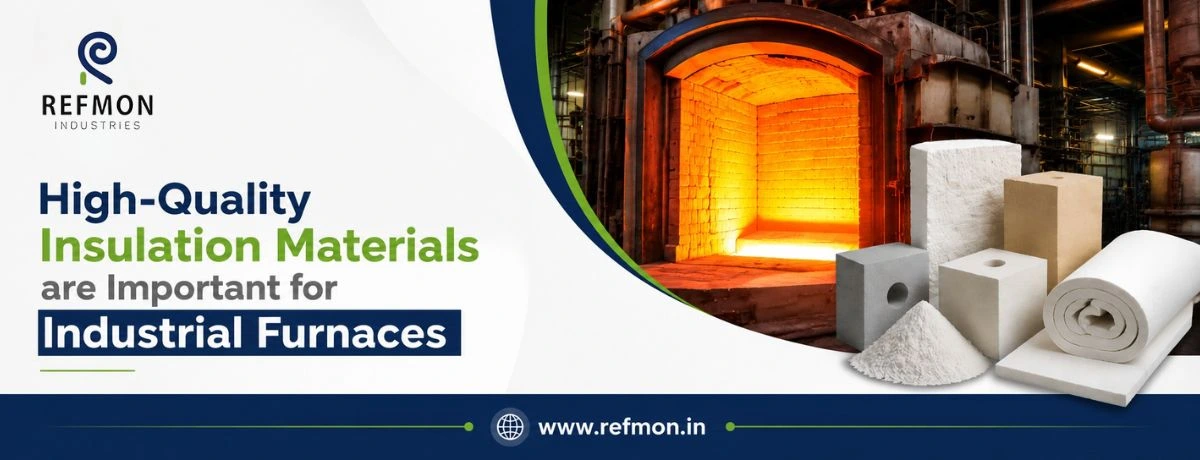
Why High-Quality Insulation Materials are Important for Industrial Furnaces?
Furnaces are typically operated at extremely high temperatures and in demanding industrial environments. Whether they are used in steel manufacturing, cement production, ceramics, glass, or chemical processing, effective insulation plays a vital role in ensuring efficient furnace performance. High-quality insulation helps minimize heat loss, reduce energy consumption, lower operating costs, and extend equipment lifespan.
Among the leading insulation material manufacturers in India, Refmon Industries offers reliable insulation solutions designed for high-temperature industrial applications.
Understanding Industrial Furnace Insulation
Industrial furnace insulation is developed in such a way that the heat loss can be reduced without changing the internal temperature level. The high-quality insulation will serve as a thermal protection that will not allow too much heat to escape, thus making the operation of furnaces more efficient, using less fuel. The use of good quality insulation will also provide thermal protection of the furnace itself from the negative impact of high temperature, thus reducing its wear and increasing operational reliability.
Why Do High-Quality Insulation Materials Matter?
High-quality insulation materials are very important in making industrial furnaces efficient and dependable. They also increase the level of safety, reduce cost of operations, and increase the longevity of industrial machines.
Below are some of the main reasons why quality insulation materials are necessary in industrial furnaces:
1. Energy Efficiency
Heat retention is another major benefits of proper furnace insulation. Heat retention ensures that there will be heat retention within the furnace, guaranteeing that the required temperatures are attained with minimal use of energy.
Consequences of energy efficiency include:
- Reduction in fuel usage
- Reduced costs
- Fast heating process
- Effective production
2. Temperature Consistency
In many industries, there is a need for precise temperature control. Lack of adequate insulation will lead to temperature variations.
Good insulation will ensure that:
- Heat is distributed evenly
- Furnaces have stable temperatures.
- Processes are well controlled
- Quality products are produced
3. Workplace Safety Improvements
The high temperatures of industrial furnaces are capable of causing harm to the workers if the furnaces are not well-insulated. Using quality insulation materials results in lower external surface temperatures and increased workplace safety for the employees.
Advantages include:
- Fewer burn injuries
- Fewer workplace hazards
- Increased worker comfort
- Adherence to industrial safety standards
4. Longer Equipment Lifespan
Due to exposure to extreme temperature ranges, there is continuous expansion and contraction of the parts of the furnace. High-quality insulation reduces thermal stresses and thus helps in safeguarding the furnace structure as well as the essential parts.
This ensures that organizations gain from:
- Decreased need for maintenance
- Less breakdowns
- Increased life of equipment
Common Insulation Materials Used in Industrial Furnaces
Varied types of industrial usage need various forms of insulation depending upon temperature, chemicals, and strength.
-
Ceramic Fibre Products: Insulation made from ceramic fibers is popular due to its light weight, good thermal insulation, and low thermal conductivity. They are commonly used in furnace linings, heat treatment equipment, and high-temperature industrial applications.
-
Refractory Bricks: Refractory bricks are excellent in terms of strength while being able to withstand the high temperatures continuously. They are widely used in furnace linings, kilns, boilers, and other high-temperature equipment.
-
Mineral Wool and Glass Wool: Materials like glass wool insulation provide thermal and sound insulation. It helps in saving energy and making the work environment comfortable.
Environmental Benefits of High-Quality Insulation
An energy-efficient furnace consume less fuel, therefore, greenhouse gases produced are minimized. This is an environmentally friendly method of production that will ensure the firms meet the required environmental standards.
Some other environmental benefits include:
- Less carbon footprint
- Efficient use of energy
- Resource efficiency
- Sustainable industrial processes
Factors to Consider When Selecting Furnace Insulation
The choice of the right insulation material must satisfy a few operational conditions.
They are as follows:
- Maximum operating temperature
- Thermal conductivity
- Strength of the insulation material
- Chemical resistance
- Installation conditions
- Maintenance conditions
- Overall life cycle cost
Working with insulation experts would ensure that all these performance and safety criteria are satisfied.
The Importance of Reliable Refractory Solutions
The industrial furnaces require tough refractories for being able to tolerate extreme heat conditions continuously. Choosing an established fire bricks manufacturer would mean gaining access to materials with good resistance to heat and mechanical strength. The firebricks increase efficiency and reduce the maintenance costs of the furnace.
Conclusion
The industrial furnaces are important assets that require efficient insulation for them to work effectively and properly. The use of better materials like the ceramic fiber blanket will help reduce the loss of heat, increase efficiency, provide constant temperature, and ensure the safety of the workers. Efficient insulation will also reduce maintenance costs, increase the longevity of the furnaces, and decrease the operational costs of the furnaces.