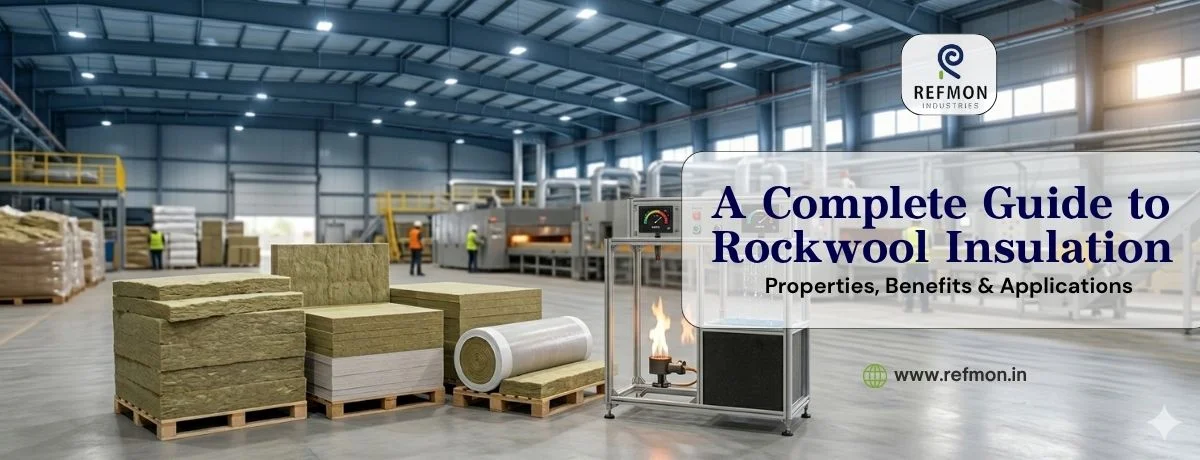
A Complete Guide to Rockwool Insulation: Properties, Benefits, and Applications
As a key feature in enhancing energy performance, temperature regulation, and fire safety, insulation is essential in residential, business, and industrial areas. Rockwool insulation is the most widely used insulation material in the industry today because it is durable, thermal, and fire-resistant. It finds extensive application in buildings, pipelines, furnaces, and industrial equipment where there is a need to insulate reliably
LRB Rockwool Manufacturer provides industries with numerous solutions to successful insulation. Being aware of the features, benefits, and applications of rockwool insulation will help make the right choice and use the right material, which will be safe and effective in the long run.
What Is Rockwool Insulation?
Rockwool insulation or mineral wool insulation is a natural rock, basalt, and recycled slag insulation. These raw materials are melted and turned into coarse fibers, producing a thick and resilient insulation material.
There are different varieties of Rockwool insulation, such as slabs, rolls, blankets, and pipe sections. It offers good thermal insulation, sound damping, and moisture resistance due to its exclusive fiber structure. It is a popular product in plants, HVAC, boilers, and construction work.
Important Characteristics of Rockwool Insulation
Rockwool insulation is appreciated due to diverse performance attributes that enable it to be used in rigorous applications.
- Excellent Thermal Performance
The main feature of rockwool insulation is the high thermal resistance. It is also effective in heat transfer, which prevents the loss of heat in hot or cold surroundings. This thermal performance helps in saving energy through decreased heating and cooling systems.
- Fire Resistance
Rockwool is inherently non-combustible and has the ability to withstand temperatures up to 1000 C. This predisposes it as a perfect fire protection insulation material. It reduces the rate of fire propagation and assists in guarding structures, machinery, and pipelines against fire.
- Sound Absorption
Rockwool is a very dense fiber that offers great acoustic insulation. It can absorb the sound waves, and it can be used in walls, ceilings, and industrial equipment to slow down the transmission of noise.
- Moisture Resistance
Rockwool insulation is water-resistant and vapor-permeable. This means that it does not enable the build-up of moisture without entrapment of humidity in the insulated system. Such a property will reduce the possibility of corrosion and the growth of molds.
- Durability
The Rockwool is durable in shape and performance. It is not easy to sag or shrink so that it provides long-term insulation in buildings and industrial systems.
Benefits of Rockwool Insulation
The special characteristics of rockwool are converted to a number of practical advantages.
- Improved Energy Efficiency
Rockwool insulation helps to increase the energy efficiency of equipment and buildings by preventing heat loss or heat gain. This results in reduced energy usage and operating costs.
- Enhanced Fire Safety
Rockwool is fire-resistant, a feature that adds an extra safety measure in the building and industrial facilities. It is able to aid in the delay of the spread of fire and the defense of essential infrastructure.
- Noise Reduction
Rockwool insulation is used in residential and industrial applications to help make the environment quieter by reducing sound transmission.
- Sustainable Material
Rockwool has a high likelihood of being produced with natural and recycled materials and hence is an environmentally friendly insulation option.
- Versatile Applications
Its performance properties can be applied to walls, roofs, ducts, boilers, tanks, and piping systems. Rockwool Hot LRB Insulation is commonly used because of its reliable thermal protection in industrial settings that demand high-temperature resistance.
Applications of Rockwool Insulation
Rockwool insulation finds applications in numerous industries because of its flexibility and performance.
- Building Construction
It is installed in residential and commercial buildings in the walls, roof, ceiling, and floor to enhance thermal efficiency and soundproofing.
- Industrial Equipment
Heat is generated by industrial machines such as boilers, ovens, tanks, and furnaces. Rockwool insulation will minimize heat loss and improve efficiency in the system.
- HVAC Systems
Rockwool is widely used in the ducting of HVAC and air-conditioning systems to control the transfer of heat and to suppress noise.
- Pipe Insulation
The pipelines of steam, hot water, or chemicals need to be well insulated to maintain heat and protect safety. Rockwool insulation is the one that is usually considered when identifying the hot insulation in piping because of its high thermal resistance and reliability.
- Marine and Power Plants
There is a continual exposure to extreme temperatures at marine and power plants. These severe conditions require quality thermal insulation and fire resistance, which Rockwool insulation can provide.
Rockwool vs Glasswool Insulation
Rockwool and glasswool are both widely used types of insulation material, with varying strengths.
Glasswool insulation is lightweight and can be applied in thermal and acoustic insulation in buildings. However, rockwool is more durable to temperatures, and provides better fire protection.
Rockwool is more likely to be more popular in industrial applications that demand the use of mechanical strength and fire resistance because of its higher density.
These materials are selected according to the insulation requirements, the environmental conditions, and the budget.
Choosing the Right Insulation Products
In selecting the right insulation products, one should consider such factors as operating temperature, exposure to moisture, fire safety requirements, and the location where the insulation will be installed.
When it comes to industrial applications, the materials must be capable of resisting high temperatures, as well as ensuring structural integrity. The two key factors in the construction of a building are energy efficiency and soundproofing.
The understanding of the working requirements shall help in making sure that the insulation material will offer good service in the long run.
Frequently Asked Questions (FAQs)
LRB rock wool insulation is a mineral wool insulation product that is used to offer thermal resistance, fire protection, and sound insulation in industrial and construction applications.
Yes, LRB Rockwool insulation is fire-resistant by nature and has a high temperature-resistant capacity, which is ideal in fire protection systems.
Yes, LRB Rockwool insulation is safe to use in buildings and industrial systems when installed correctly and used within the safety regulations.
It can be used in walls, roofs, HVAC systems, boilers, furnaces, tanks, and piping systems where thermal and fire insulation are required.