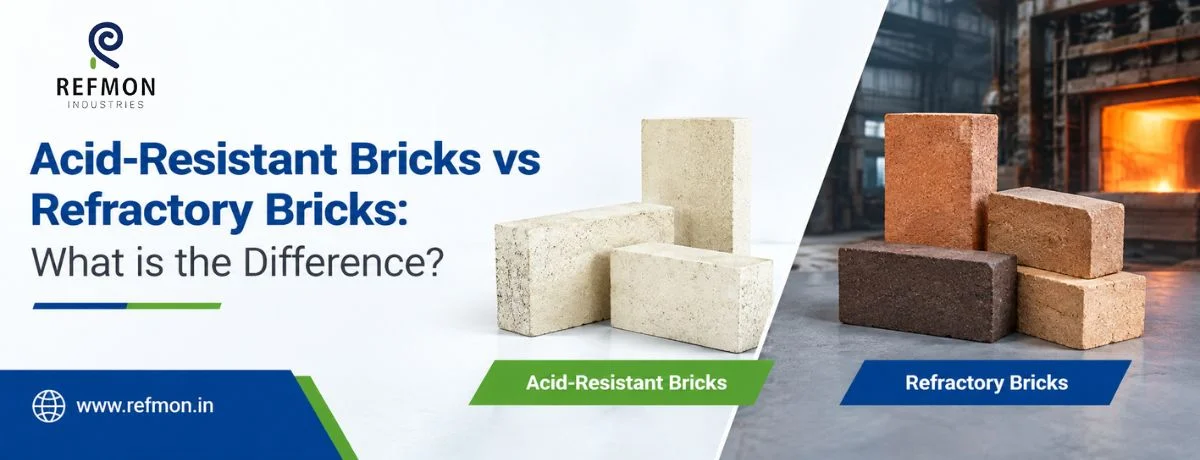
Acid-Resistant Bricks vs Refractory Bricks: What is the Difference?
Ask a site engineer which brick goes into a new lining, and you might get a shrug. Fair enough. Both bricks are used in industrial linings, and they can look much alike on a pallet. Put the wrong one in the wrong place, though, and the lining starts failing within months. Floors pit under acid. Furnace walls spall under heat. Neither is cheap to redo.
This guide explains how acid-resistant bricks differ from refractory ones, where each belongs, and what to check before you order.
What are Acid-Resistant Bricks?
Acid resistant bricks are pressed from selected clay or shale and fired until the body turns dense and glassy. The firing process creates a dense, vitrified body with low porosity, helping limit the penetration of corrosive liquids. They are also commonly known as acid proof bricks, although actual chemical resistance depends on the product specifications.
Their primary purpose is chemical resistance rather than sustained high-temperature service, and the mortar matters. Use a chemically compatible acid-resistant mortar, because the joints can be a weak point in the lining.
Common Applications of Acid-Resistant Bricks
Think of anywhere corrosive liquid touches the structure. Floors and drains usually take the worst of it.
-
Plant floors: They shrug off spills and washdowns.
-
Acid tanks: The lining protects the shell behind it.
-
Chimney linings: Suitable acid-resistant materials can protect against acidic condensate under the right operating conditions.
-
Effluent areas: Sumps carry a nasty mix of waste.
-
Fertilizer units: Acid exposure rarely stops.
What Are Refractory Bricks?
Refractory bricks are built for heat that would crumble ordinary masonry. Fireclay, high alumina, silica or magnesia go in, depending on the furnace.
Heat is rarely the only killer. Slag, abrasion and shutdown cycles wear a lining down too. A brick that lasts for years was well matched to its operating conditions. One that spalls early wasn't.
Common Applications of Refractory Bricks
If a process runs hot enough to wreck normal construction, a refractory lining sits between the fire and the shell.
-
Steel furnaces and ladles: Molten metal and slag attack together.
-
Cement kilns: They run hot day and night.
-
Glass tanks: Molten glass is rough on linings.
-
Boilers: Combustion zones need walls that hold their shape.
-
Foundries: Repeated heating and cooling can expose weaknesses in the lining.
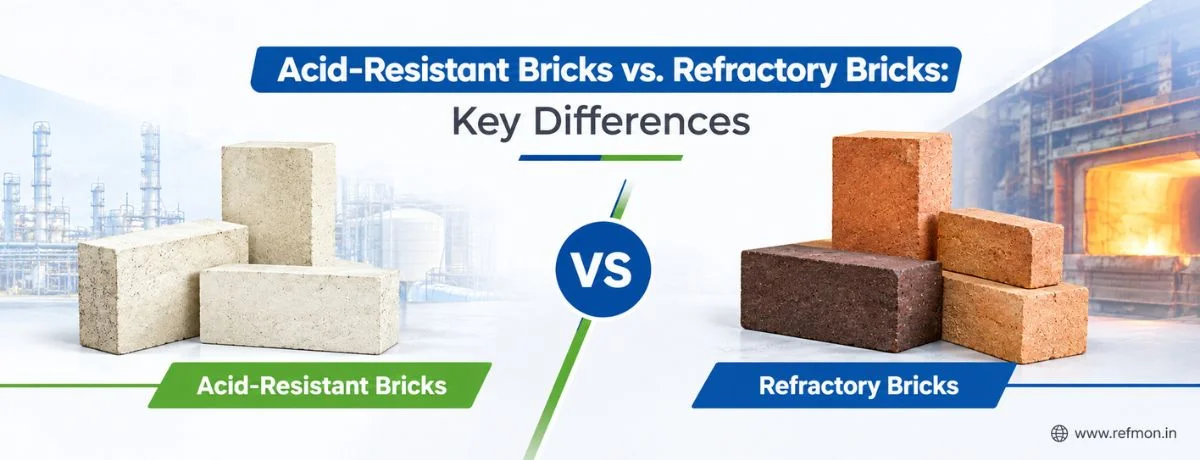
Acid-Resistant Bricks vs. Refractory Bricks: Key Differences
One group fights chemistry, while refractory bricks fight heat. The table fills in the rest.
| Factor |
Acid-Resistant Bricks (Acid Proof Bricks) |
Refractory Bricks (Fire Bricks) |
| Main job | Resist chemicals | Resist high temperature |
| Main degradation risks | Chemical attack and joint failure | Thermal shock, spalling and slag attack |
| Raw materials | Clay or shale, vitrified | Fireclay, alumina, silica, magnesia |
| Mortar | Acid-proof | Refractory mortar |
| Typical location | Floors, tanks, drains | Furnaces, kilns, ladles |
| Usual failure | Attack at joints | Cracking, spalling |
How to Choose the Right Industrial Brick
Start with what's damaging the lining right now. Heat or chemistry usually dominates and that narrows the choice quickly.
-
Name the enemy: Corrosion points to acid proof bricks, and heat points to a refractory grade.
-
Use peak temperatures: Averages hide the spikes that cause early failures.
-
Count the shutdowns: Frequent stops punish weak bricks.
-
Check the mortar: The wrong mortar means failed joints.
-
Ask for test reports: Check acid resistance, water absorption, crushing strength and relevant high-temperature properties, depending on the application.
Can Both Types Be Used in the Same Plant?
Often, yes. A furnace can sit near an acid tank, and each needs its own lining. Early talks with refractory manufacturers in India help sort out what goes where.
-
Chimneys: Refractory materials may be used in hot zones, while areas exposed to acidic condensate may require an acid-resistant lining.
-
Sulphuric acid plants: Furnace sections get refractory, while towers and tanks get acid-resistant lining.
-
Pickling units: Heat treatment and acid baths often share a building.
Conclusion
Acid-resistant bricks keep corrosive chemicals out of floors and tanks. Refractory bricks (Fire bricks) keep furnaces standing under heat. Neither replaces the other, so match each to the real problem in that part of the plant, not to the price tag. Check the mortar, ask suppliers for test reports, and be honest about peak temperatures. Do that and a lining can run for years without drama. Skip it, and you'll be pulling bricks out sooner than anyone planned.
Looking for the right industrial lining solution? Refmon Industries can help you explore suitable acid-resistant and refractory brick options. Contact Refmon Industries today to discuss your project requirements.