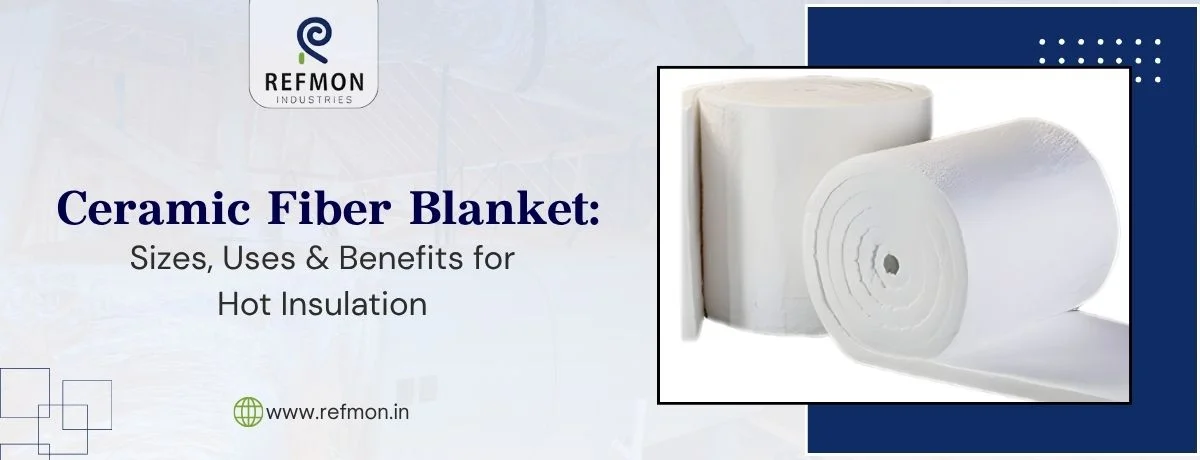
Ceramic Fiber Blanket: Sizes, Uses & Benefits for Hot Insulation
Ceramic fiber blankets are mostly utilized in industries that require high thermal insulation. The ceramic fiber blanket is non-combustible, flexible, and strong, making it suitable for harsh conditions. It helps reduce heat loss, increase energy efficiency, and secure equipment, so it cannot be disregarded in current hot insulation operations.
Ceramic Blanket Size
Ceramic fiber blankets are available in various sizes to meet the needs of different industries. The standard thicknesses of these blankets include 12 mm, 25 mm, and 50 mm. Its width is approximately 610 mm, with length varying by manufacturer and application.
Another factor is the blanket's density. High-density Ceramic fiber blankets are better insulated and more durable, particularly in warm climates. They come in different sizes and densities, allowing industries to use products that meet their thermal and mechanical requirements.
Also, ceramic blankets can be cut or shaped to fit intricate surfaces. This is what makes them ideal for lining furnaces, kilns, and pipes, where an exact fit is vital.
Ceramic Blanket Uses
Industries that work at high temperatures have been utilizing ceramic fiber blankets. They are very efficient because of their lightweight construction and thermal stability.
Ceramic blankets are used in -
- Furnace lining to maintain heat and enhance thermal efficiency
- Boilers and kilns with insulation to ensure even temperature
- Pipeline and reactor protection in petrochemicals
- Fire systems to serve as resistant to heat
- Flexible and thermal shock-resistant expansion joints and gaskets
Hot Insulation Materials
When discussing high-temperature applications, one should understand the role of hot insulation materials. These materials are tailored to withstand high heat while retaining structural integrity.
Ceramic fiber blankets are considered such because they have low thermal conductivity and high heat resistance. Insulating bricks, calcium silicate boards, and refractory castables are also included in this category. All materials are good, but ceramic blankets are the easiest to install and are light.
Various hot insulation materials are commonly used in industry to achieve optimal results. For example, a furnace can be built with structural strength using refractory bricks and insulation using ceramic blankets. This mix will ensure durability and energy efficiency.
Ceramic fiber blankets also offer another benefit: corrosion and chemical-attack resistance. This makes them usable in severe industrial operational conditions when other materials might not perform.
Advantages of Ceramic Fiber Blanket
Ceramic fiber blankets offer several benefits that make them an appealing choice for industrial insulation applications.
- One of the primary strengths that can help lower energy consumption and operational costs is their high thermal efficiency.
- They are also lightweight, making them easy to carry and install compared to conventional insulation materials. They can be molded to fit irregular surfaces, providing complete coverage and reducing heat loss.
- The other significant benefit is that they are robust. Ceramic blankets can be used long-term, as high temperatures will not ruin them.
- They also offer good sound absorption, helping reduce noise in industrial settings.
Additionally, these blankets are resistant to thermal shock, meaning they do not break or become unusable when temperatures change rapidly.
Conclusion
Ceramic fiber blankets work well and can withstand high temperatures. They are flexible, tough, and efficient; therefore, they are popular in industries. Insulation product manufacturers in India provide such solutions to meet the increasing industrial demand, enabling businesses to become more efficient in their energy consumption and ensuring safe working conditions.
Frequently Asked Questions (FAQs)
1. What is a ceramic fiber blanket?
A ceramic fiber blanket is a lightweight, flexible insulation material made from alumina-silica fibers. It provides excellent thermal resistance, making it ideal for high-temperature industrial applications.
2. What are ceramic fiber blankets used for?
Ceramic fiber blankets are widely used for insulation in furnaces, kilns, boilers, and pipelines. They help reduce heat loss, improve energy efficiency, and protect equipment from extreme temperatures.
3. What thickness options are available?
Ceramic fiber blankets are available at Refmon Industries in various thicknesses, typically ranging from 25 mm to 50 mm.