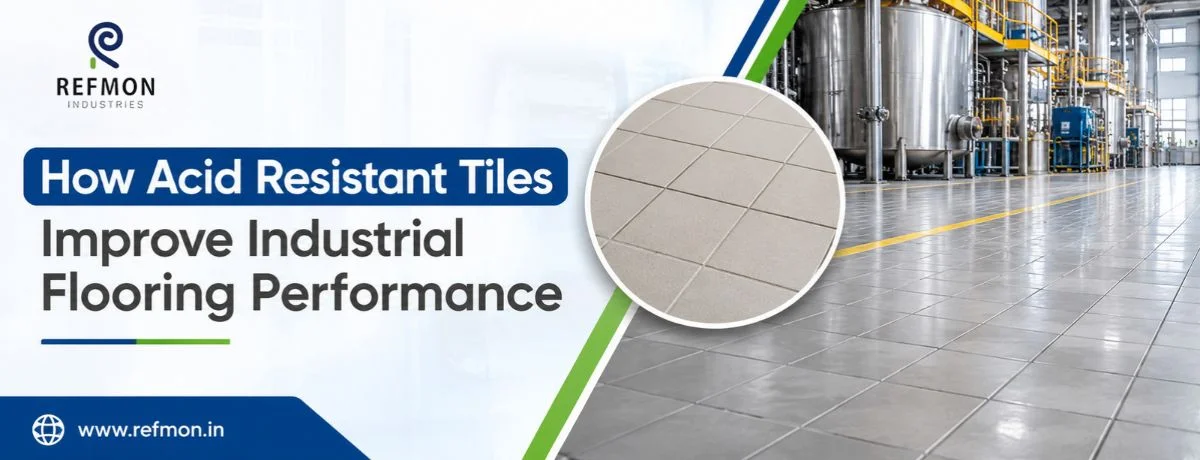
How Acid Resistant Tiles Improve Industrial Flooring Performance
Industrial floors are exposed to various chemicals, accidental spills, heavy equipment, and high levels of daily activity. Conventional flooring materials can deteriorate over time due to regular industrial activities, affecting both floor performance and daily operational efficiency. Avoid claiming that acid resistant tiles are always the safest option. Their suitability depends on the chemicals, concentration, temperature, and operating conditions. These tiles are commonly used in chemical processing facilities, laboratories, manufacturing units, and other industrial environments where chemical exposure is a concern.
Why Does Industrial Flooring Need Chemical Protection?
Industrial floors have to deal with more than a typical floor. There's always a chance that chemicals, acids, alkalis, oil, and various liquids will land on the floor while doing work and cleaning. Nominal concrete, tiles and even flooring can not stand up to some chemicals and therefore can crack and loosen over time. This leads to more maintenance at the expense of the building.
How Do Acid-Resistant Tiles Protect Industrial Floors?
Acid resistant floor tiles are intended to take the corrosive action of a large variety of acids and other chemicals. They help to preserve the main floor covering material by preventing certain liquids to come into direct contact with this material. These types of tiles are suitable for use in environments where chemicals will probably be accidentally spilled while being manufactured, stored, or processed and also assist to keep the floor in good condition when you use the appropriate adhesives and jointing system.
Important Features of Acid-Proof Tiles
-
Acid-proof tiles are selected for industrial floors that come into contact with corrosive media.
-
Performance depends on the chemicals, concentration, temperature, and length of contact.
-
They are normally installed with an appropriate chemical-resistant mortar and jointing material to form a barrier flooring system.
-
These tiles are also beneficial in chemical processing plants, battery manufacturing areas, fertilizer units, food processing plants, and laboratory situations.
-
The appropriate tile type needs to be selected after verifying the exposure to chemicals.
Role of Acid-Resistant Lining in Industrial Flooring
The acid-resistant lining is for the protection of the base surface and the joints. The tiles alone may not be enough to ensure the protection.This ensures that the entire flooring system is protected from chemical ingress via joints, gaps, and exposed areas. Combined with chemical resistant tiles, a proper lining system will enhance overall protection. There is no single lining material that can be used for all types of chemicals.
How Do These Flooring Systems Improve Industrial Operations?
1. Improved Workplace Safety
Chemical-resistant floors can preserve the quality of a work area by creating a surface that is stable and fully protected. The right type of flooring will even make cleaning up after an accidental spillage much simpler.
2. Lower Maintenance Requirements
If flooring materials are used according to real working conditions, they can minimize damage caused by chemicals and thus avoid repeated repair work.
3. Enhanced Durability Under Harsh Conditions
Industrial flooring can be subject to chemical exposure, temperature fluctuations, and constant movement of equipment. The use of the correct flooring system can help to control these conditions much better.
4. Improved Operational Efficiency
A long-lasting floor decreases the number of disruptions in business processes. Acid-resistant flooring offers an easy way to prevent damage to floors from acids and chemicals. Suitable tiles, lining material and acid-proof mortar can be used to increase the acid resistant qualities of a floor and reduce maintenance work.
Choosing the Right Acid-Resistant Products
The working environment should be considered when choosing the acid-resistant products, as an acid-resistant lining may need to be specific to the acids handled. Not all lining products work with every chemical. Before choosing a flooring system, industries should evaluate the type of acid, chemical strength, temperature, and how often it will be exposed.
You just need to examine the primary surface, the imposed loads, and the cleaning mechanisms. If you are doing an industrial project, it would be better to turn to specialists with appropriate expertise by taking the guidance of refractory manufacturers in India or specialist technical guides.
Conclusion
Acid-resistant flooring plays an important role in protecting industrial surfaces from corrosive chemicals and demanding working conditions. Suitable tiles, lining material, and acid proof mortar can be used to increase the acid-resistant qualities of a floor and reduce maintenance work. Selecting an appropriate product, appropriate chemicals, appropriate temperature conditions, as well as the suitable installation of the tiles, will create a safe floor, which can then be repaired or replaced as necessary.
Looking for reliable acid resistant tiles and industrial flooring solutions? Connect with Refmon Industries for durable flooring materials designed to meet demanding industrial requirements.