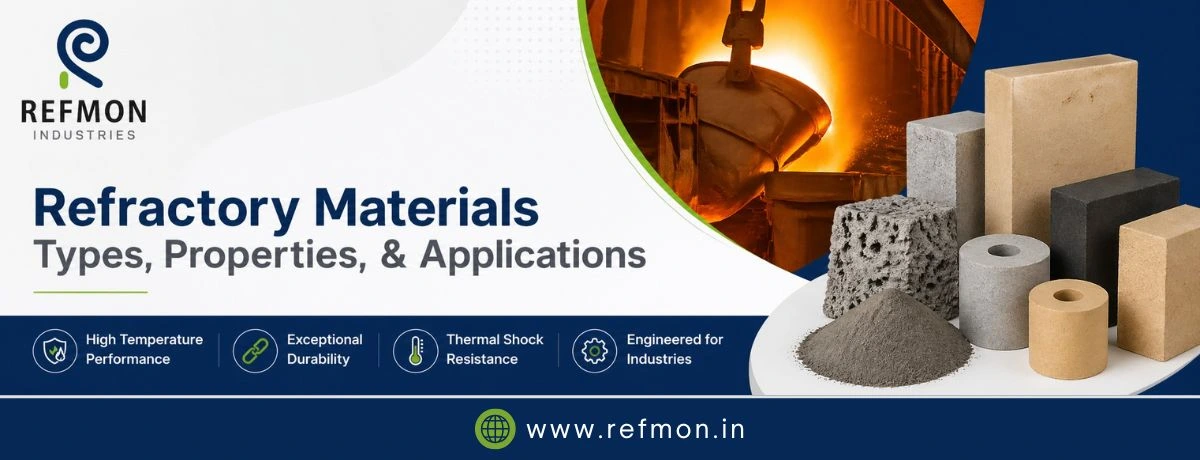
Refractory Materials: Types, Properties, & Applications
Refractory materials are crucial in sectors where extremely high temperatures prevail, such as the steel, cement, glass, and petrochemical industries. These kinds of materials have been made to withstand high temperatures, pressure, and even chemical reactions without weakening at all. These make them useful when it comes to improving efficiencies and safety during the process. The choice of the correct materials will result in fewer instances of downtime. With the support of a refractory material manufacturer like Refmon Industries, you can select the best material for your needs.
What Are Refractory Materials?
Refractory materials are those materials that can tolerate temperatures above 1000°C. They are made up of natural minerals such as alumina, silica, magnesia, and other synthesized materials. These materials are widely used in high-temperature equipment, especially for refractory lining in furnaces, where resistance to heat and corrosion is essential.
Types of Refractory Materials
-
Acid Refractories: They are resistant to acidic slags and the environment and thus can be used in silica-based processes. These are often employed in glass furnaces and coke ovens where acidic slag occurs.
-
Basic Refractories: They are suitable in resisting alkaline or basic slags and can withstand high lime conditions. These are widely used in steel furnaces and metallurgical processes
-
Neutral Refractories: They can be used in either acidic or basic environments and thus offer maximum versatility. These have a wide range of uses because of their stability in any environment.
-
Shaped Refractories: They are ready-made products in the form of bricks and other blocks with defined shapes. It is easy to use them for the construction and lining of furnace walls.
-
Unshaped Refractories: They are also referred to as monolithic refractories and are found in powdered and paste forms. They are used in seamless furnace wall lining.
Key Properties of Refractory Materials
1. Resistance to High Temperatures
The materials withstand extremely high temperatures without losing their structure. They do not soften or weaken due to prolonged exposure to heat.
2. Heat Insulating Properties
They prevent heat from being transferred from one place to another. Therefore, these materials help to retain the required temperature inside furnaces or other systems.
3. Mechanical Resistance
The materials have enough strength to support heavy loads. This means that they can be used in industries characterized by harsh conditions.
4. Resistance to Chemical Reactions
They cannot undergo any reaction with slag, gases, or other materials in a liquid state. As a result, they are protected from corrosion.
5. Resistance to Thermal Shock
The materials are able to endure sudden shifts in temperatures without being destroyed. This implies that the materials will have longer lifespans when heated and cooled.
Applications Across Industries
Refractory materials are widely used in:
1. Steel Plants
Refractories protect furnaces and ladles against extreme temperatures and corrosion due to molten metals. They ensure structural stability as well as effective steel-making processes.
2. Cement Industry
Refractory materials used in cement kilns can handle high temperatures along with abrasions. The use of refractory material enhances thermal efficiency and also increases the life span of kilns.
3. Glass Production Plants
Refractory materials are utilized in glass production plants. They are capable of handling high temperatures with molten glass.
4. Petroleum Processing Plants
Refractories are employed in reactors and processing units subject to high temperature and corrosive chemicals. This provides safety and reliability of process operations.
5. Power Plants
Refractories are used in boilers and incinerators subjected to high temperature and pressure. They increase the energy efficiency of the processes performed.
In such challenging conditions, the choice of Refractory Material becomes very important
Benefits of Quality Refractory Solutions
-
Increased Energy Efficiency: Refractory substances prevent heat loss due to effective heat insulation. It allows industries to conserve fuel and cut down on their energy usage.
-
Longer Service Life of Machinery: These substances shield equipment from high temperatures, abrasion, and corrosion. It protects machinery from damage and prolongs its service life.
-
Lower Maintenance Expenses: Top-notch refractory materials necessitate less maintenance and replacement. It leads to lower costs and minimizes machine downtime.
-
Greater Safety: These substances offer protection from high temperatures and adverse conditions. It ensures greater safety for employees and machinery.
-
Consistent Work under Harsh Conditions: They provide resistance to high temperatures and harsh conditions. It ensures that industries will function consistently under difficult conditions.
Industry Trends and Developments
The refractory industry is constantly developing through advances in technology, including:
-
Environmentally friendly material usage
-
Higher utilization of monolithic refractories
-
Advancement of smart technology
-
Creation of light-weighted insulating materials
Lightweight insulating materials such as Ceramic Fiber Blanket are becoming increasingly popular because of their high resistance to heat and easy installation process.
Conclusion
Refractory materials form the heart of high-temperature operations in industries. Their capability to endure high temperatures while also insulating and maintaining durability cannot be overlooked. With the appropriate refractory material and an efficient supplier, industries will reap more benefits than drawbacks.
Frequently Asked Questions (FAQs)
1. Where are refractory materials applied?
Refractory materials are used for lining equipment that works at elevated temperatures. These materials help protect equipment from heat, chemical reactions, and mechanical damage.
2. How can the use of refractory materials improve energy efficiency?
With their ability to insulate heat, they can help conserve heat energy in an industrial process. Thus, they will decrease the consumption of fuel required for heating.
3. Why does selecting the right refractory material matter?
The right material is critical for ensuring equipment operates properly. In addition, proper selection decreases maintenance expenses.